The 2026 Commercial Cost Guide and Precast Plant Feasibility
The Precast Transition: Navigating Pakistan’s High-Yield Construction Equipment Market
The infrastructure landscape across Pakistan is undergoing a profound structural shift. Driven by rigorous testing protocols in premium real estate developments like the Defence Housing Authority (DHA), Bahria Town, and major state-led public works, the traditional clay brick kiln is rapidly becoming an obsolete construction relic. Environmental regulations, localized winter smog bans, and the inherent geometric irregularities of hand-molded clay bricks have pushed civil engineers, corporate builders, and commercial real estate contractors exclusively toward high-density, machine-pressed precast concrete elements.
For industrial investors, infrastructure contractors, and commercial yard owners, stepping into the concrete masonry unit (CMU) production sector represents an exceptionally lucrative asset class. However, navigating the machinery market is challenging. Equipment procurement is often plagued by deceptive pricing structures, sub-standard metallurgical fabrication, and overly complex, sensitive electrical systems that struggle with local power grid instability. To build a highly profitable precast plant, investors must look beyond initial capital expenditure and evaluate the true lifetime operational cost, hydraulic compaction configurations, and component reliability.
Structural Realities: Understanding the Machine Automation Hierarchy
A precast yard’s daily production velocity, direct labor overhead, and market product consistency are entirely determined by the machine’s underlying automation architecture. In the Pakistani market, machinery prices vary drastically based on hydraulic compaction force, vibration mechanics, and programmable logic controller (PLC) configurations.
1. Manual and Lever-Operated Block Setups
These entry-level configurations rely primarily on manual mechanical linkages, heavy user lever physical operations, and basic egg-layer or small fixed-mold layouts.
- Mechanical Attributes: These setups feature low compaction force, minimal vibration control, and high physical labor dependency. They are typically powered by basic single-phase or small three-phase electric motors.
- Price Bracket: Typically ranges from PKR 350,000 to PKR 1,200,000 depending on the structural metal gauge and country of origin.
- Strategic Viability: While attractive for village-level startups or low-risk domestic perimeter wall contractors, these manual machines are structurally incapable of meeting the strict high-volume, load-bearing structural compliance criteria required by corporate real estate networks or state infrastructure monitoring bodies.
2. Semi-Automatic Hydraulic Power Plants
This tier bridges the gap between low-budget entries and high-capacity automated setups. These systems combine manual aggregate material feeding with strong hydraulic compression and synchronized mechanical table vibrations.
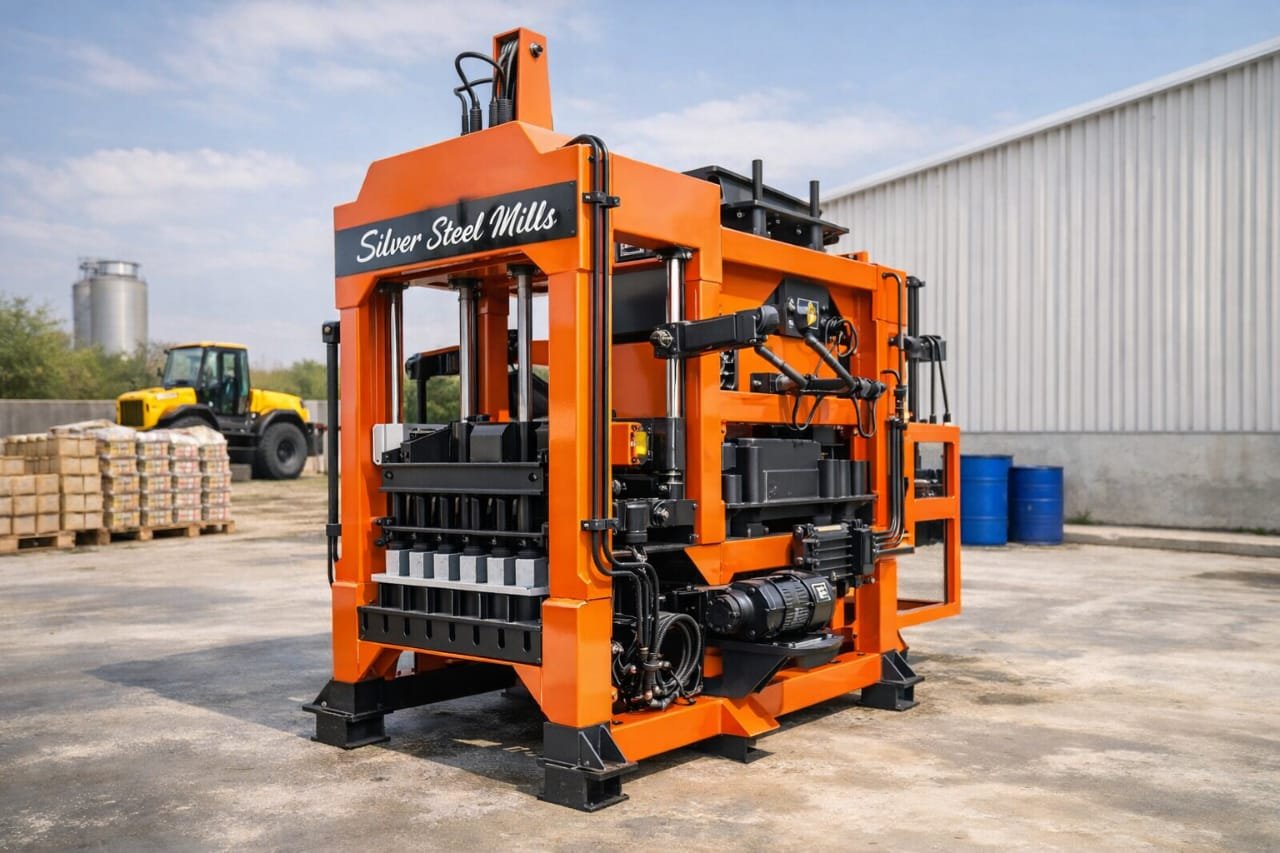
- Mechanical Attributes: These plants leverage dedicated hydraulic pump stations capable of delivering 40 to 80 tons of downward compaction force. They require manual lever shifting to activate the hydraulic cylinders and lift the molds, but they eliminate the physical exertion of molding blocks.
- Price Bracket: Varies significantly from PKR 1,500,000 to PKR 4,500,000.
- Strategic Viability: Highly popular among mid-tier commercial suppliers across growing industrial regions such as Gujranwala, Lahore, and Faisalabad. They offer a balanced compromise between manageable upfront asset costs and adequate material output density.
3. Fully Automated Computerized Plant Complexes
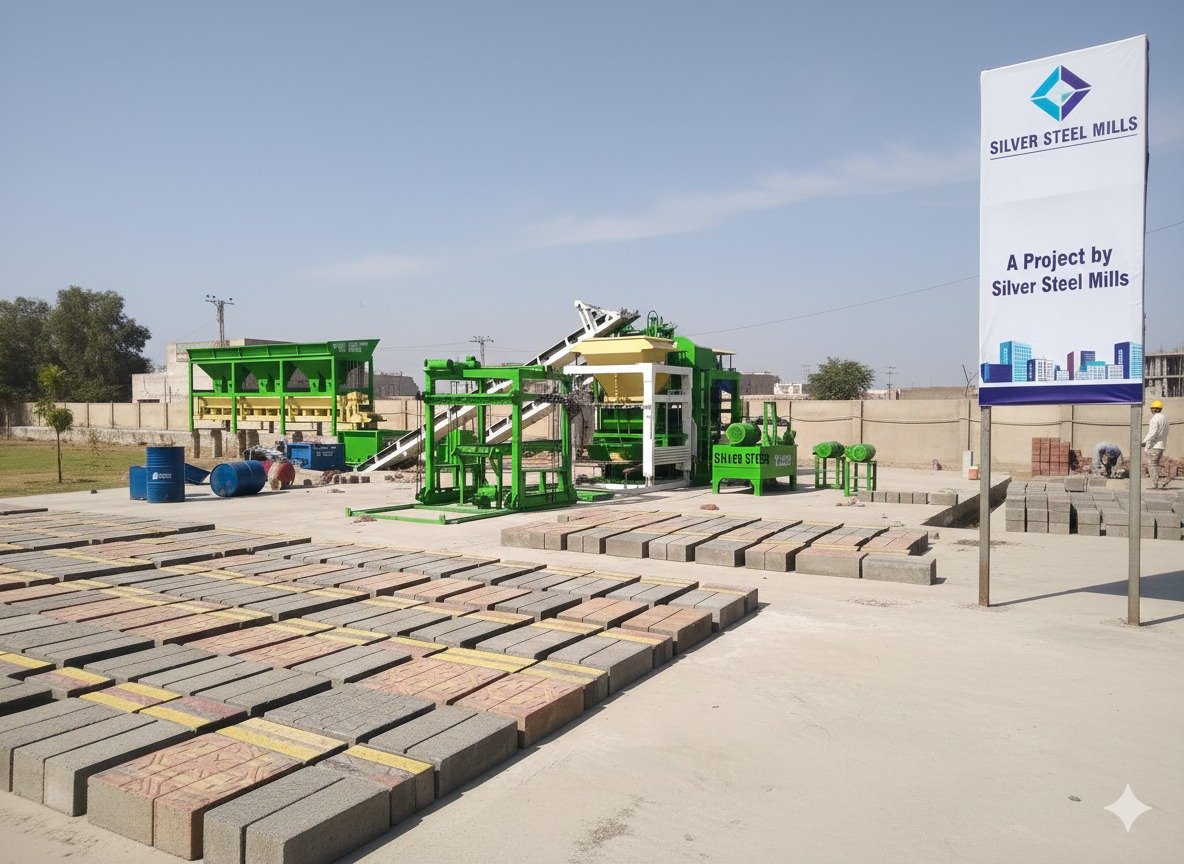
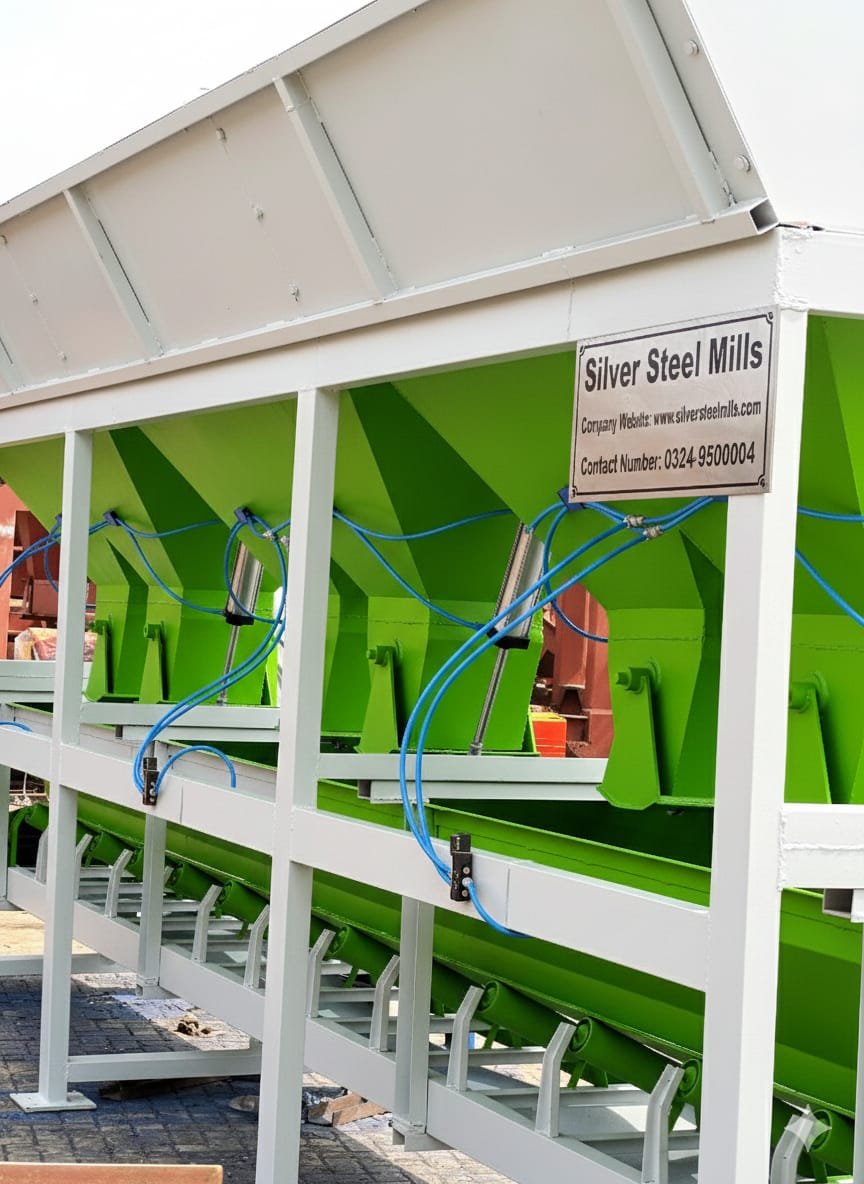
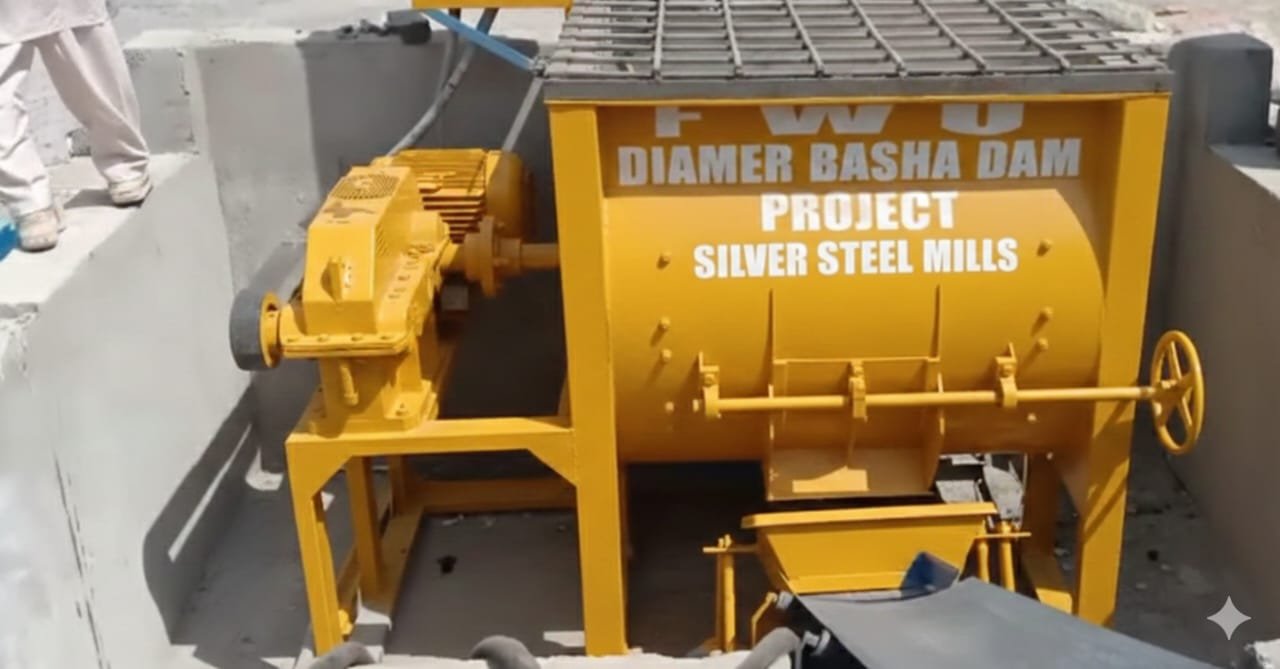
Designed for uninterrupted, large-scale industrial manufacturing, these systems operate as fully integrated processing lines. They manage every stage of production automatically, from aggregate bucket batching and planetary concrete pan mixing to automatic pallet conveyance and multi-tier hydraulic green block stacking towers.
- Mechanical Attributes: These advanced units deliver 100 to 250+ tons of linear hydraulic compaction force coupled with multi-directional high-frequency vibration beds ($4,500text{ RPM}$). They are entirely managed by central digital PLC control stations featuring intelligent interactive touchscreens.
- Price Bracket: Ranges from PKR 5,000,000 to PKR 25,000,000+, depending on the exact material processing capacity, mold variety configurations, and automated handling add-ons.
- Strategic Viability: The industry benchmark for high-tier suppliers targeting corporate supply grids, motorway sound barrier works, public sector tenders, and high-volume commercial paver distribution channels.
2026 Price Matrix: Comparative Analysis of Machinery Tiers in Pakistan
To provide a clear overview for structural investment mapping, the table below highlights the performance metrics, daily output volumes, and estimated capital cost breakdowns across standard industrial equipment categories.
| Machinery Tier Category | Average Price Range (PKR) | Tonnage Compaction Force | Daily Production Capacity (8-Hour Active Shift) | Optimal Application Targets | Labor Dependency Scale |
| Manual Lever Setups | Rs. 350,000 – 1,200,000 | 5 to 15 Tons | 500 – 1,200 Units (Standard Solid/Hollow) | Micro-contractors, small local boundary walls. | High (6–8 Operators) |
| Semi-Automatic Plants | Rs. 1,500,000 – 4,500,000 | 40 to 80 Tons | 1,500 – 3,500 Units (Blocks & Interlocking Pavers) | Mid-scale housing projects, regional supply yards. | Medium (4–5 Operators) |
| Fully Automated Line (Standard) | Rs. 5,000,000 – 9,000,000 | 100 to 150 Tons | 4,000 – 8,000 Units (Complex Precast Profiles) | Mega housing schemes, commercial distribution networks. | Low (2–3 Operators) |
| Mega Industrial Complexes | Rs. 10,000,000 – 25,000,000+ | 150 to 250+ Tons | 10,000 – 25,000+ Units (Heavy Duty Curbstones) | High-volume public tenders, multi-state infrastructure. | Minimal (Fully Automated PLC) |
The Sourcing Dilemma: The Hidden Risks of Reconditioned Equipment
A common financial misstep among new investors looking to reduce upfront asset expenses is turning to unverified digital classified ads to purchase secondary machinery. Searching under popular queries such as block making machine price in pakistan olx or used block making machine for sale in pakistan often uncovers heavily overhauled or reconditioned equipment at enticing prices (often between PKR 300,000 and PKR 1,500,000).
However, running a continuous manufacturing operation with pre-owned equipment introduces significant hidden engineering risks that can quickly destabilize a company’s financial layout:
1. Structural Micro-Fractures and Frame Torsion Fatigue
Precast equipment is constantly subjected to massive kinetic forces and intense harmonic table vibrations. Over years of unmonitored operation, raw steel structures develop microscopic stress fractures along critical weld seams and primary vertical load bearing joints.
When an old machine is reinstalled on a new concrete foundation slab, these hidden micro-cracks often expand under intense hydraulic loads. This structural fatigue causes the main compression frame to twist slightly out of vertical alignment. Once the frame twists, the compression dies lock unevenly, leading to uneven block heights and frequent mechanical lockups.
2. Inner Hydraulic Spool Scratches and Thermal Pressure Loss
The heart of any hydraulic precast machine is its valve block and piston assembly. In used machinery, fine sand particles and abrasive Sargodha dust frequently bypass worn oil filtration seals, scoring the precision-machined internal surfaces of the hydraulic cylinders.
During typical Pakistani summers, ambient temperatures regularly reach $45^circtext{C}$ to $52^circtext{C}$. This extreme heat causes the hydraulic fluid to lose its viscosity and thin out. The internal scratches allow this hot oil to slip past the control valves, leading to an immediate drop in system compaction pressure. As a result, the machine produces structurally weak, low-density green blocks that crumble as soon as they are pushed onto the curing yard floor.
3. Severely Worn Die Molds and Geometric Inaccuracies
The abrasive nature of raw materials like Ravi sand, crushed rock aggregates, and coarse fly ash means that every molding cycle slightly wears down the steel interior of the die walls.
Pre-owned machinery molds are frequently worn past their precise engineering tolerances. Blocks produced by these worn-out molds are geometrically irregular, often featuring bloated midsections or thin, brittle corners. Modern site inspectors and civil engineers use digital calipers to verify block dimensions on-site. If a batch displays geometric variations, entire delivery fleets will be flatly rejected, forcing the manufacturer to absorb the cost of wasted materials and transport.
Production Floor Economics: The Mathematical Feasibility and Balance Sheet
To demonstrate the real-world profitability of an automated precast operation within the domestic construction ecosystem, here is an objective per-unit manufacturing cost layout. This analysis assumes a standard 8-inch concrete hollow block configuration produced on an automated line with integrated batching controls.
Direct Raw Materials Inflow Matrix
- High-Grade Portland Cement (OPC Grade 52.5): Rs. 22.50 (Calculated based on optimized precise weight-batching ratios to avoid material waste)
- Sargodha Crushed Rock Dust / Fine Screened Aggregates: Rs. 14.00
- Coarse Ravi Sand / Lawrencepur Mix Mineral Filler: Rs. 7.50
- Clean Process Water + Hydration Accelerating Admixtures: Rs. 1.00
Variable Operational Overhead Scales
- Direct Floor Production Labor Wage Split: Rs. 4.50 (Based on a highly efficient 3-man automation operator configuration)
- 3-Phase Industrial WAPDA Grid Power / Generator Fuel Backup: Rs. 3.50
- System Maintenance Overhaul Buffer (Hydraulic Fluid Lubricants, Die Spares Wear): Rs. 1.00
Total Industrial Gate Cost: Rs. 54.00 Per Block
Wholesale Monetization and Asset Payback Velocity
In the current wholesale construction market, certified, high-density 8-inch concrete hollow blocks easily command a factory-gate price ranging from Rs. 85.00 to Rs. 100.00 per piece, depending on the volume of the contract and delivery location.
$$text{Net Operating Profit Margin Per Unit} = text{Rs. } 90.00 (text{Market Wholesale Average}) – text{Rs. } 54.00 (text{Production Gate Cost}) = mathbf{text{Rs. } 36.00}$$
If an automated industrial plant line produces a standard volume of 8,000 blocks per typical 8-hour running shift, the daily net cash inflow yield is calculated as follows:
$$text{Daily Cash Income Yield} = 8,000 text{ Units} times text{Rs. } 36.00 = mathbf{text{Rs. } 288,000 text{ Net Fluid Cash Flow Per Day}}$$
Operating on a standard monthly schedule of 25 active production days, a plant can generate up to Rs. 7,200,000 in gross monthly operational cash flow. Even after accounting for land yard lease metrics, raw aggregate inventory storage expenses, and corporate administrative overhead, a well-managed plant can completely recover its initial machinery capital expenditure (CapEx) within 10 to 14 months of launch.
Crucial Technical Metrics for Purchasing High-Performance Equipment
Before finalizing an agreement for industrial machinery, production managers and corporate procurement officers must carefully evaluate three key engineering specifications:
The 12,000 PSI Hardened Tuff Tile Compaction Threshold
Government contracts, infrastructure agencies, and public housing authorities impose strict quality baselines for outdoor paving units and structural interlocking pavers. These standards mandate a minimum compressive strength of 12,000 PSI.
Achieving this dense level of molecular compaction requires a machine frame built with premium hydraulic main cylinders and synchronized vibration systems. Cheap, lightweight workshop machinery rarely surpasses 4,000 to 5,000 PSI, rendering their products illegal for high-tier public tenders and institutional commercial installations.
Hardened CNC Carbon-Steel Die Molds
Ensure the production molds are manufactured from high-carbon steel plates that have undergone precise computer numerical control (CNC) wire-cutting and deep multi-stage heat treatment carburizing processes. Hardened molds resist the constant abrasion of rock dust and coarse sand, maintaining sharp geometric tolerances for over 100,000 to 150,000 continuous production cycles before requiring structural replacement.
Localized Electrical PLC Panel Insulation and Voltage Tolerance
A common issue with imported off-the-shelf machinery is that the standard electronic control microchips often struggle with local power grid instability, frequent line voltage drops, and severe ambient heat waves.
Smart manufacturers integrate intelligent automated control systems with heavy-duty thermal insulation shields, independent cooling fan systems, and robust local voltage stabilizers. These protective features safeguard sensitive electrical relays from sudden field burnouts and prevent costly plant downtime.
Maintenance Architecture: Proactive Protocols for Zero Down-Time
To maximize the working lifecycle of high-capacity precast equipment and ensure consistent product quality, production crews should implement a strict, schedule-driven preventive maintenance routine:
[Daily Clean & Lubricate Guide Rails] ---> [Weekly Hydraulic Oil Contamination Scan] ---> [Monthly Structural Weld Crack Diagnostics]
- Daily Material Clean-Down: Concrete slurry and fine rock dust must be thoroughly washed off the main guide pillars, mold edges, and linear slide tracks at the end of every active shift. If allowed to dry, this residue hardens into abrasive crusts that score precision metal rods and destroy hydraulic rubber scraper seals.
- Weekly Hydraulic Fluid Analysis: Check the main oil reservoir for signs of thermal degradation or particulate contamination. The hydraulic fluid should be run through specialized external multi-micron filtration loops, and the system filter cartridges must be replaced regularly to keep operating pressures stable.
- Monthly Torsional Bolt Fastener Audits: Precast machinery is subjected to intense, continuous vibration. Maintenance crews must use calibrated torque wrenches to inspect all primary anchor pins, structural base bolts, and high-pressure hydraulic hose couplings to prevent unexpected component failures during active production runs.
Industry Insights: Future Directions in the Precast Manufacturing Space
Looking ahead, the precast concrete element industry is being shaped by two major technological trends:
1. The Global Shift Toward Green Pozzolanic Formulations
As carbon taxation policies tighten and global environmental awareness grows, leading precast manufacturers are increasingly substituting traditional carbon-heavy Portland cement with alternative green materials. Utilizing components like industrial blast-furnace slag, silica fume, and eco-friendly coal-combustion fly ash allows plants to drastically lower raw material costs while enhancing the thermal insulation and chemical resistance of the finished blocks.
2. The Integration of Centralized AI Production Monitoring
Modern, forward-looking precast facilities are beginning to incorporate intelligent Internet of Things (IoT) sensor arrays directly onto the primary machine frames. These smart sensors continuously stream real-time data regarding cylinder hydraulic pressure curves, motor vibration frequencies, and cycle time efficiencies straight to centralized software monitoring hubs.
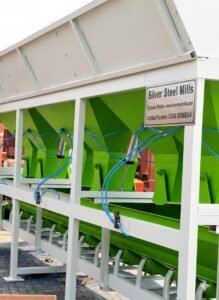
Many progressive equipment fabricators, such as Silver Steel Mills, now seamlessly integrate advanced automated control systems and remote diagnostics options. This high-tech setup allows owners to spot minor mechanical anomalies before they escalate into major failures, optimizing raw material usage and maximizing overall plant production efficiency.
Frequently Asked Questions (FAQ Schema-Style)
What is the ideal land size required to establish a commercial block factory in Pakistan?
A viable commercial precast block facility requires a minimum land footprint of 1 to 2 Kanals. This space is necessary to properly accommodate the main hydraulic machinery foundations, raw aggregate material storage bays (for sand, crush, and cement), water storage tanks, and a large open curing yard with enough layout capacity for thousands of finished green blocks.
Can a single automatic block machine manufacture both hollow blocks and interlocking pavers?
Yes. Modern, high-performance precast machines are engineered as multi-functional platforms. By simply swapping out the internal CNC die molds and adjusting the PLC software cycle parameters, a single machine can seamlessly transition from pressing structural hollow blocks to producing high-density interlocking pavers, solid bricks, or heavy curbstones.
Why do blocks frequently crack or develop weak edges during the initial curing phase?
Premature cracking is typically caused by two factors: incorrect water-cement ratios in the planetary mixer or inadequate hydration management in the curing yard. Green blocks must be kept consistently moist under dedicated water misting lines or shade curtains for at least 7 to 14 days to ensure the cement completely undergoes its chemical crystallization process, which locks in maximum structural strength.
How do local power grid voltage fluctuations impact fully automatic PLC machinery?
Sudden voltage surges or line dropouts can cause sensitive electronic logic chips to freeze, corrupting active software production cycles or burning out expensive PLC control modules. To prevent these costly technical disruptions, industrial precast yards should always install heavy-duty voltage stabilizers and specialized circuit breakers, or run production lines on a dedicated, stable diesel generator backup.
Actionable Strategy for Industrial Investors
Entering the precast concrete manufacturing sector offers a reliable path to high revenue generation, provided investors prioritize long-term equipment reliability over low upfront costs. Opting for cheap, unverified workshop setups or worn-out used machinery frequently leads to constant mechanical breakdowns, inaccurate product dimensions, and rejected delivery orders that can quickly derail a business plan.
For a secure and highly profitable operation, investors should partner with established, factory-direct manufacturers that utilize certified, brand-new structural steel frames and provide robust, localized after-sales technical support. Laying a reliable mechanical foundation from day one allows an enterprise to confidently secure premium high-margin supply contracts, maximize raw material efficiency, and achieve total capital investment recovery within its first year of operation.

Post Comment